Gear
Emergency Communications: NOAA Radio, Two-Way Radios, and a Family Plan
In most real emergencies the first infrastructure to wobble is the one in your pocket. Networks congest, towers lose power, and a phone at 12% becomes a flashlight with anxiety. Prepared communications are layered: receive information first (a battery or crank NOAA weather radio), then short-range family contact (two-way radios), then, for those who invest in it, licensed radio services that reach much farther.
This guide keeps the licensing facts straight, because they decide what you may legally transmit on: FRS needs no license in the US, GMRS requires an FCC license (no test), and amateur (ham) radio requires passing an exam. Receiving, on any of them, is always free and legal.
Quick facts
- Receive first
- A NOAA weather radio with battery/crank power is the single highest-value comms item
- FRS
- No license, short range (realistically 0.5-2 miles in terrain), radios sold everywhere
- GMRS
- FCC license required, no exam; higher power and repeaters extend range
- Ham radio
- FCC exam required (Technician class is the entry); widest reach and emergency networks
- The plan
- Written contacts, out-of-area relay person, and rally points, on paper, in every bag
Layer 1: hearing what is happening
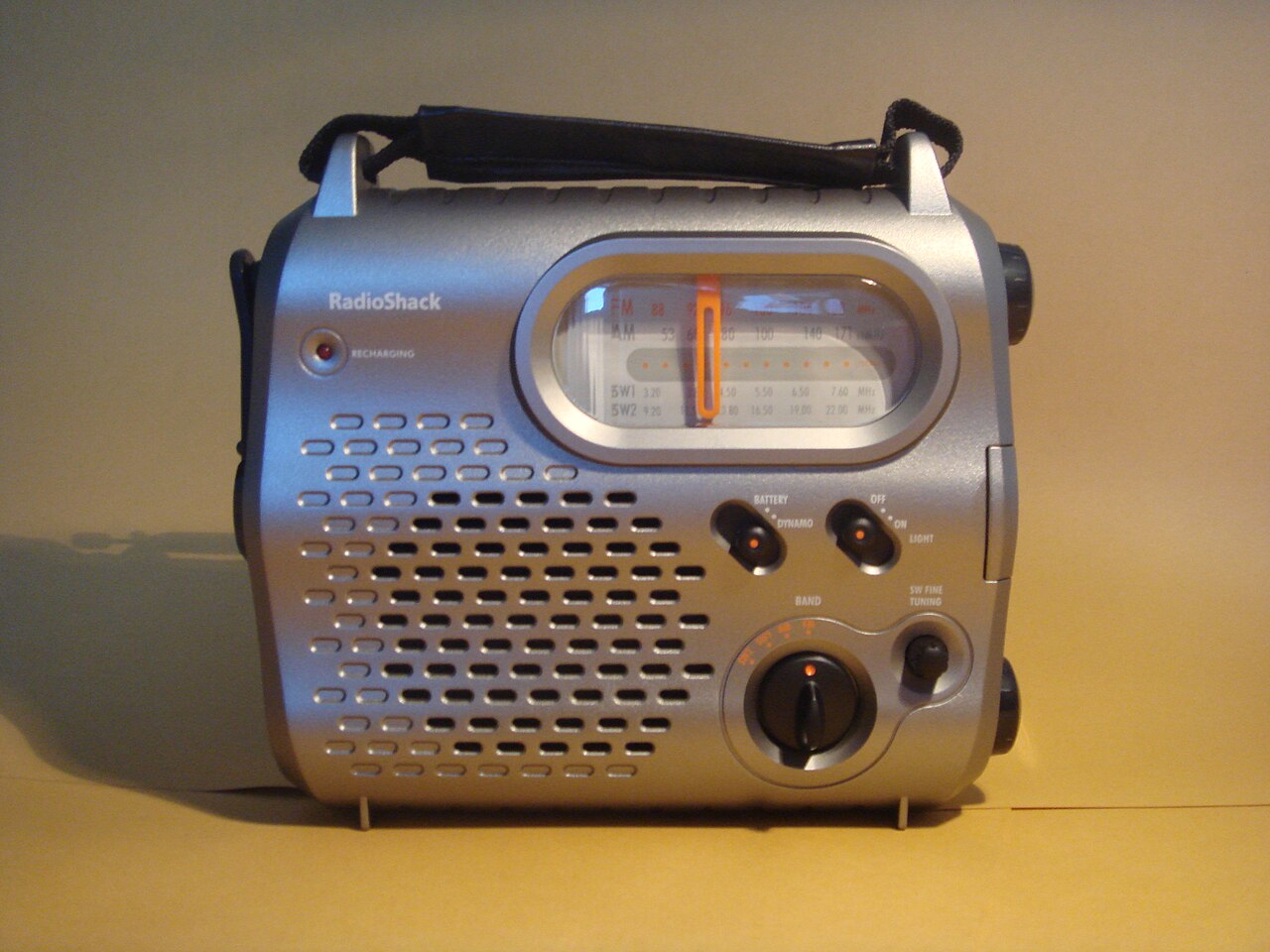
NOAA Weather Radio broadcasts warnings, watches, and forecasts around the clock from National Weather Service transmitters, and SAME-equipped receivers can sit silent until an alert for your county arrives. During tornado outbreaks, hurricanes, and winter storms, this is the channel that still works at 3 AM when the power is out and the phone network is jammed. Get one with battery backup or a hand crank, and a second cheap battery set in the go bag.
Add a small AM/FM radio: local stations become the community bulletin board in long outages.
Layer 2: the family net
FRS radios (the blister-pack walkie-talkies) are license-free and fine for a convoy, a neighborhood, or a house-to-barn link. Their advertised ranges assume mountaintop-to-mountaintop; plan on half a mile to two miles in real terrain and suburbs. GMRS uses the same shelf of radios' bigger siblings: an FCC license (application, no test, covers your immediate family) allows higher power, external antennas, and repeaters, which is where real neighborhood coverage comes from.
Whatever you buy, the radios are only half the system. Decide the channel, the check-in times, and the code words now, write them on a card taped inside each radio's battery cover, and practice on a boring Saturday.
Layer 3: ham radio, for those who go further
Amateur radio's Technician license opens VHF/UHF repeaters and local emergency nets (ARES/RACES volunteers are woven into many county emergency plans), and higher licenses open global shortwave. The entry exam is multiple choice and genuinely studyable in a couple of weekends. If communications is your scenario's weak point (rural, wildfire country, hurricane coast), a license and a modest mobile rig change the picture more than any gadget on this page.
The paper layer underneath everything
Every radio plan fails without the plan itself: an out-of-area contact everyone calls or texts (long-distance lines often work when local ones do not), two rally points (one near home, one across town), school and work pickup rules, and a household card with medications and meeting notes. Print it. Put a copy in every bag, car, and wallet.
Step-by-step: put it into practice
Tick each step off as you complete it. Your progress is saved on this device.
Where to buy: we link brands directly until our affiliate reviews are complete. Current plain links:
Sources
Facts checked against the sources above. Last verified: November 11, 2026. If a figure here ever conflicts with an official source, the official source wins, and we want to hear about it via the contact page.