Gear
Faraday Bags and EMP Protection: What Works, What Is Marketing
An electromagnetic pulse (EMP), whether from a high-altitude nuclear detonation or an extreme solar storm (a coronal mass ejection like the 1859 Carrington Event), can induce damaging currents in electronics and power lines. Faraday protection is the household-scale answer: store critical electronics inside a continuous conductive enclosure that diverts the energy around them.
This corner of preparedness attracts the most exaggerated marketing in the industry, so this guide separates the physics from the sales copy: what shielding actually requires, how to test it honestly, and which devices are worth protecting at all.
Quick facts
- What a Faraday enclosure is
- A continuous conductive shell with no gaps; energy flows around the outside
- Biggest real-world risk driver
- Long conductors (power lines, antennas) collect surge energy; small disconnected devices are far less exposed
- Shielding stack
- Nested layers with an insulating layer between them improve protection and redundancy
- The phone-signal test
- Useful sanity check only: blocking a cell signal does not prove EMP-grade protection
- Worth shielding
- A backup radio, laptop with your documents, spare phone, solar charge controller, LED lights, and storage drives
The risk, sized honestly
The grid is the soft target, not your phone. Long transmission lines act as antennas for the slow, powerful component of a pulse or solar storm, which is why the planning scenario that matters is 'the grid is down for a long time and my unplugged spares still work,' not 'every device in my house fries instantly.' A Carrington-scale solar storm is a documented historical event (1859, with a near-miss in 2012), so this is a low-probability, high-impact corner of planning, sized accordingly in the budget: after food, water, and shelter, not before.
How shielding actually works
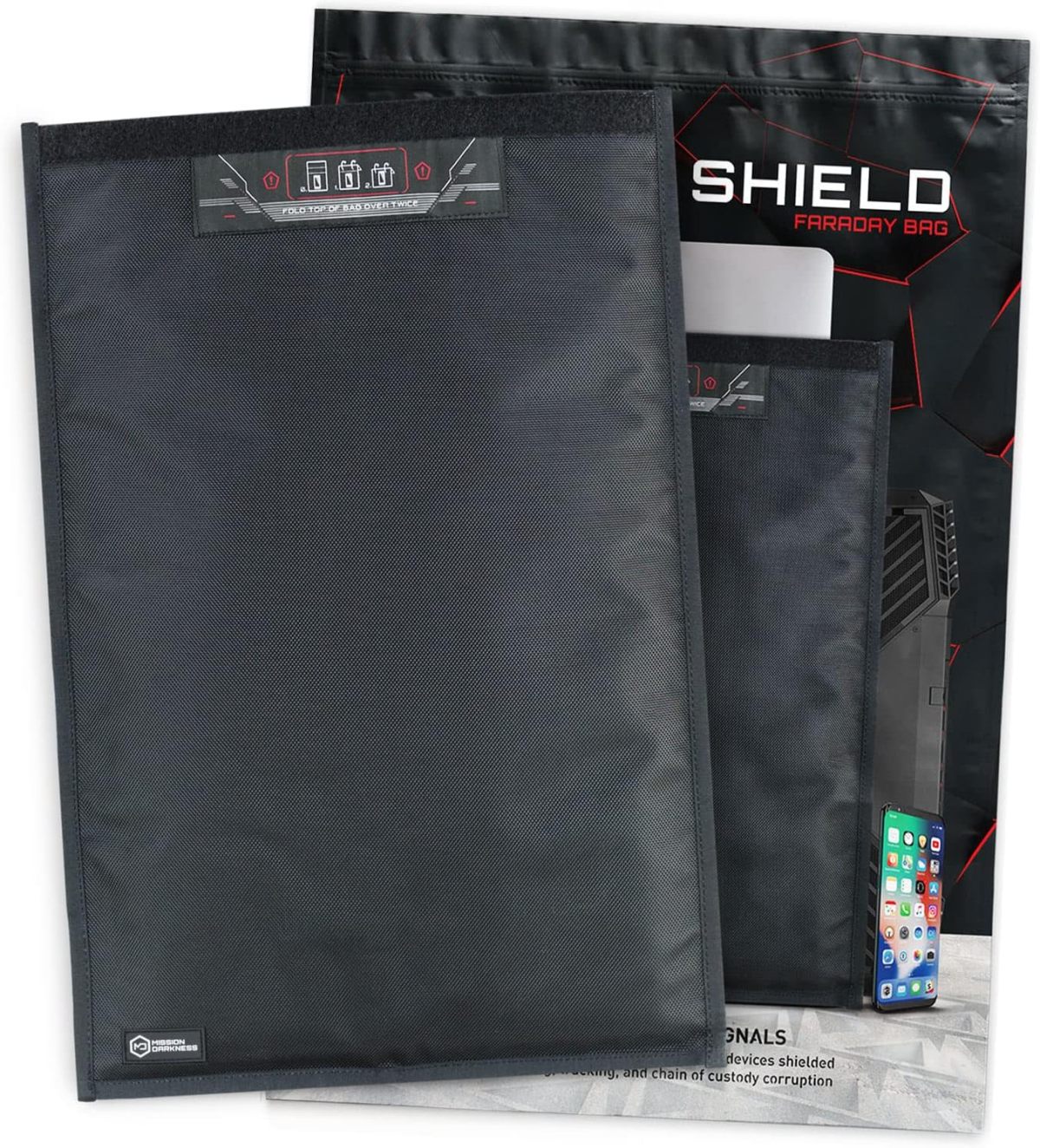
A Faraday enclosure must be electrically continuous: metal or metallized fabric on all sides, seams overlapped or taped with conductive tape, and the opening sealed. A metal trash can with a tight lid genuinely works as an enclosure when the lid seam is sealed with conductive tape and the contents are insulated from the walls (a cardboard or fabric liner). Purpose-built bags (SLNT and Faraday Defense are the established names) trade the can's rigidity for packability and tested attenuation ratings.
Nesting (a device in a bag, inside a sealed metal bin) adds an independent second barrier. What does not work: a single layer of household foil with tears, a microwave (its door seal is tuned for one frequency band and leaks elsewhere), or any container with cords poking out of it.
What to put inside
- The backup NOAA/two-way radios and a spare phone, powered off
- A laptop or tablet holding your documents, photos, and offline references, plus charging cables
- Spare solar charge controller and a small pure-sine inverter (the parts of a solar system you cannot improvise)
- LED lanterns, headlamps, a battery charger, and USB storage with backups
- Nothing with an external antenna or cord connected while stored
Testing without fooling yourself
The common test, call the phone inside the bag and see if it rings, only proves the bag blocks some radio frequencies at cell power levels. Treat it as a minimum check, not proof. For real confidence, buy tested products with published attenuation data, seal enclosures carefully, and re-check seals when you do your twice-yearly audit. Perfect certainty is not available at household prices; layered, tested, well-sealed protection is.
Step-by-step: put it into practice
Tick each step off as you complete it. Your progress is saved on this device.
Where to buy: we link brands directly until our affiliate reviews are complete. Current plain links:
Sources
Facts checked against the sources above. Last verified: November 11, 2026. If a figure here ever conflicts with an official source, the official source wins, and we want to hear about it via the contact page.