Food storage
Home Freeze Dryers: What a Harvest Right Actually Costs and Does
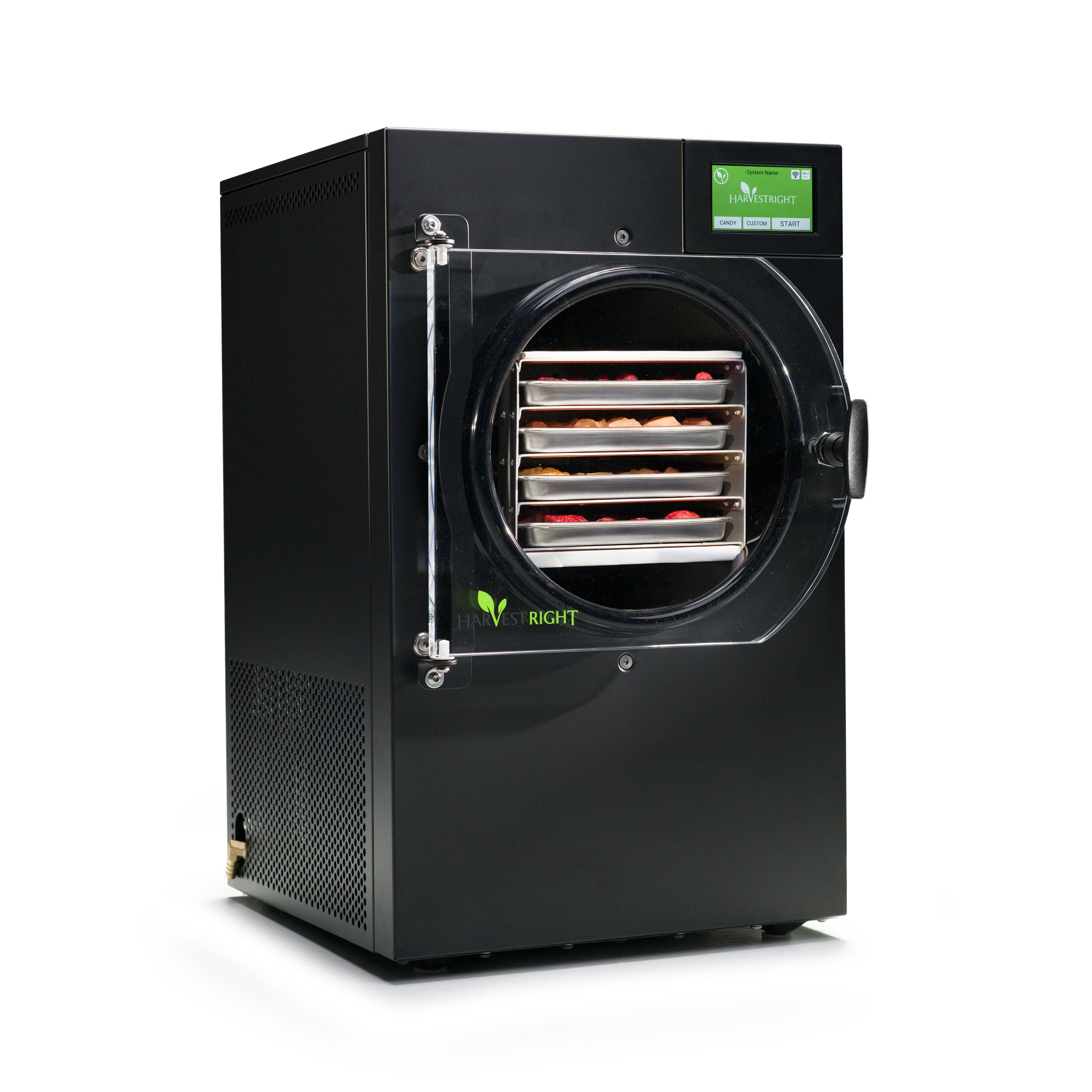
A home freeze dryer does what the big preparedness brands do, on your counter: it turns garden produce, meat bought on sale, eggs, cheese, and complete cooked meals into shelf-stable food that keeps for up to 25 years in Mylar. For households serious about Layer 4 food production, it is the single most capable tool there is.
This guide covers how the machines work, the real total cost (machine, electricity, bags, absorbers, maintenance), cycle times, and which foods reward freeze-drying and which disappoint.
Quick facts
- Machine price range
- About $1,795 (Small) to $4,495 (X-Large) at current list prices
- Fresh food per batch
- Roughly 4-7 lb (Small) up to 40-50 lb (X-Large) per load, model-dependent
- Cycle time
- About 24-48 hours per batch, food-dependent
- Shelf life of output
- Up to 25 years in Mylar with oxygen absorbers, stored cool
- Affiliate terms (for transparency)
- Harvest Right pays affiliates 3-10% tiered, 45-day cookie, $200 minimum payout
How the home machine works
Load sliced food on trays, and the machine freezes it to around -30 to -40°F, then pulls a deep vacuum while gently warming the shelves. Ice leaves as vapor and condenses on the chamber walls as frost. When the sensors judge the food dry, the cycle ends: you bag the food immediately, because freeze-dried food pulls moisture from room air fast.
The process is mostly waiting. Hands-on time is slicing, loading, and bagging, which is why most owners run the machine in a steady rhythm, a load or two a week, building storage from grocery sales and garden gluts they would otherwise lose.
The honest cost picture
Beyond the machine, budget for electricity (a cycle uses roughly a clothes-dryer-scale amount of power spread over a day or two), Mylar bags and oxygen absorbers for every batch, and pump maintenance: standard pumps need periodic oil changes, oil-free pumps cost more up front. Per pound of finished food, home freeze-drying still lands far below retail freeze-dried meals, especially for meat, eggs, and fruit bought cheap in season.
The machine pays for itself fastest in households that would otherwise buy commercial freeze-dried food, garden heavily, hunt, or buy meat in bulk. If your plan is mostly rice and beans, buckets are cheaper. Freeze dryers shine on the foods buckets cannot do.
What freeze-dries brilliantly, and what does not
- Brilliant: sliced fruit, berries, cooked meats, scrambled eggs, cheese, yogurt drops, soups, chili, casseroles, herbs, garden vegetables.
- Good with prep: avocado (shorter life), ice cream (a novelty that stores surprisingly well), raw meat (cook after rehydrating, handle with care).
- Poor: high-fat foods like peanut butter and butter (fat does not dry and goes rancid), honey and syrups (never dry), chocolate, and anything mostly oil.
- Rule of thumb: if water is not the main ingredient, freeze-drying will not preserve it for decades.
Food safety basics
Freeze-drying pauses microbes; it does not sterilize. Start with clean food, clean trays, and clean hands, cook raw meats after rehydration, and treat home freeze-dried food with the same respect you would give home canning. When in doubt about a batch, bag it for the short-term pantry instead of the 25-year shelf.
Step-by-step: put it into practice
Tick each step off as you complete it. Your progress is saved on this device.
Where to buy: we link brands directly until our affiliate reviews are complete. Current plain links:
Sources
Facts checked against the sources above. Last verified: November 11, 2026. If a figure here ever conflicts with an official source, the official source wins, and we want to hear about it via the contact page.