Water
Emergency Water Storage: How Much, In What, and For How Long
Water is the first problem in every emergency, because it is the one supply the body cannot ration for long. The CDC baseline is simple: store at least one gallon per person per day, for at least three days, and prepared households stretch that to two weeks or more. One gallon covers drinking and basic sanitation for one person for one day in moderate conditions.
This guide covers the amounts by household, which containers are safe, how to sanitize and fill them correctly, how often stored water needs rotating, and where to put hundreds of pounds of it without regretting the decision.
Quick facts
- CDC baseline
- At least 1 gallon per person per day for 3 days, for drinking and sanitation
- Rotation
- Replace home-filled water every 6 months (CDC guidance)
- Container rule
- FDA-approved food-grade containers only; never containers that held toxic chemicals
- Sanitizing mix
- 1 teaspoon unscented bleach (5-9% sodium hypochlorite) in 1 quart of water (CDC)
- Storage conditions
- Cool place, 50-70°F, away from gasoline and pesticides
How much your household actually needs
Start with the CDC floor, then adjust honestly. Hot climates, physical work, illness, pregnancy, and a diet of dry stored food all push real needs up, sometimes to two gallons a day. Pets need roughly a gallon a day for a mid-size dog. Run your own numbers with the water storage calculator: people, days, and conditions, converted into barrels, jugs, and cases.
Fourteen days is the preparedness sweet spot for storage volume: a family of four needs 56 gallons at the CDC rate, which is one 55-gallon barrel plus a case or two of bottled water. Ninety days is 360 gallons, which means tanks, and that is a different conversation about space and structure.
Containers: what is safe and what is not
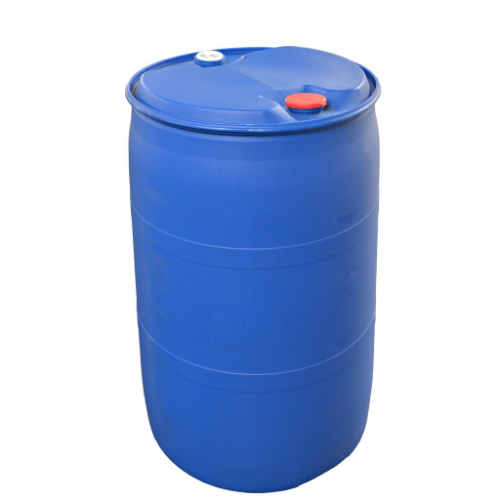
Use containers made and sold for water or food: blue HDPE barrels and jugs, food-grade tanks, and commercial bottled water in its original sealed bottles. The blue color is not cosmetic; it limits light and algae growth. Never use milk jugs for long storage (they degrade and are nearly impossible to sanitize fully), and never use any container that previously held fuel, pesticides, or chemicals.
Water is heavy: 8.34 pounds per gallon. A full 55-gallon barrel weighs about 480 pounds and is not moving once filled, so fill barrels where they will live, on a ground floor or slab, with a siphon pump for access.
Sanitizing and filling, step by step
The CDC method: wash the container with dish soap and rinse completely. Sanitize with a solution of 1 teaspoon of unscented liquid household chlorine bleach (5-9% sodium hypochlorite) mixed in 1 quart (4 cups) of water. Pour it in, shake so it touches all inside surfaces, wait at least 30 seconds, pour it out, and let the container air dry (or rinse with clean water) before filling.
Fill from a clean hose rated for drinking water or straight from the tap, leave a little head space, cap tightly, label with the fill date, and store in a cool place between 50 and 70°F, away from gasoline, pesticides, and other toxic substances stored in the same space.
Rotation and the six-month rule
Properly stored municipal tap water does not 'expire' so much as slowly lose its chlorine protection and pick up off tastes through container walls. The CDC guidance is to replace water you filled yourself every six months, and to use the old water for plants or cleaning rather than wasting it. Commercially bottled water carries a two-year practical rotation in most preparedness guidance.
Put rotation dates on your calendar when you fill. Water storage fails quietly: nobody discovers a problem until the day the water is the whole plan.
Step-by-step: put it into practice
Tick each step off as you complete it. Your progress is saved on this device.
Where to buy: we link brands directly until our affiliate reviews are complete. Current plain links:
Sources
Facts checked against the sources above. Last verified: November 11, 2026. If a figure here ever conflicts with an official source, the official source wins, and we want to hear about it via the contact page.