Preparedness News
72 Hours Is the Floor, Not the Plan: What FEMA Actually Recommends in 2026
News brief · November 11, 2026 · ReadyStockpile news desk
Ask an official how much emergency supply a household needs and you will never hear one number. You will hear a floor and a direction. Ready.gov, FEMA's public preparedness site, recommends food and water for at least several days. The American Red Cross recommends a 3-day supply if you have to evacuate and a 2-week supply for staying home. And FEMA's own booklet, written with the Red Cross, recommends building up to a two-week supply of food and water kept at home.
Preparedness marketing has flattened all of that into “the 72-hour kit,” as if three days were the destination. Three days is the floor: the minimum below which a household becomes a burden on responders instead of a help to itself. This brief lays out the official numbers exactly as the agencies publish them, then shows the build order that takes a household from the floor to two weeks and beyond.
The official numbers, as published
- Ready.gov (FEMA): at least several days of food and water, including one gallon of water per person per day for drinking and sanitation. Children, nursing mothers, and sick people may need more, and water needs can double in very hot weather.
- American Red Cross: a 3-day supply of food and water for evacuation, and a 2-week supply for home, at the same gallon-per-person-per-day rate.
- FEMA and the American Red Cross, Food and Water in an Emergency: build up to at least a two-week supply of food and water at home, starting with familiar foods that need no refrigeration, no water, and no cooking, including staples already on your cupboard shelves.
- CDC: store at least one gallon per person per day for at least three days, in food-grade containers, and replace water you filled yourself every six months.
Why the floor is 72 hours
The 72-hour figure comes from response planning. In the first days of a major disaster, roads, stores, and water systems can all be down at once while outside help is still moving. A household that can feed and water itself for three days is not competing for the first scarce deliveries, and is free to help neighbors instead of needing rescue itself.
That makes 72 hours a sensible minimum and a poor finish line. The disruptions that actually happen to American households, multi-day power outages, boil-water notices, ice storms, hurricane recovery, routinely run longer than three days. The agencies know this, which is why the same publications that set the floor also point past it.
The two-week home number
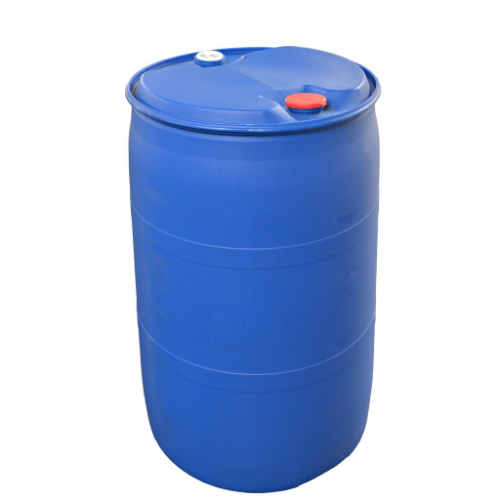
Fourteen days is where the math changes character without changing difficulty. Water is 14 gallons per person, so a family of four needs 56 gallons: one 55-gallon barrel, filled once and rotated twice a year, covers it. Food is about 28,000 calories per person at a 2,000-calorie planning rate, and the FEMA and Red Cross booklet is explicit that this layer is mostly ordinary food: canned goods, dry mixes, and staples from your own cupboard, eaten and replaced in normal rotation.
In other words, the two-week home supply is not a product you buy in a bucket. It is a pantry with a number attached, built from food the household already eats, plus water stored on purpose. Households that frame it that way finish it; households waiting to buy a kit usually do not.
Building past the floor, in order
Each layer covers the emergencies more common than the next, and each layer gets used in normal life, so nothing is wasted money sitting in a corner.
- The bag: 3 days, portable. The bug-out bag or evacuation kit, one per person, by the door or in the car.
- The home floor: 2 weeks. Water in a barrel or jugs, food as a working deep pantry, plus light, heat, sanitation, and medications.
- The staple layer: 30 days. Bulk grains and beans in buckets, a treatment method for water beyond storage, and an off-grid cooking method.
- Deep storage: 90 days and beyond. #10 cans and long-life staples, built gradually and rotated, for households that want the long scenarios covered.
What this means for your stockpile
Start where the officials start: several days on hand, a gallon per person per day, then build deliberately toward two weeks at home before buying anything exotic. The scenario checklists on this site are organized by exactly these layers, so a household can tick its way from the floor to two weeks in a weekend.
- Run your water number first: people times days times one gallon. For most households the answer is one barrel, not a pallet.
- Count food in calories per person per day, about 2,000, never in servings.
- Build the bag and the home supply as separate projects with separate numbers: 3 days portable, 14 days at home.
- Water Storage Calculator: your exact gallons, barrels, jugs, and cases
- Food Storage Calculator: your exact calories, pounds, and bucket counts
- Scenario Checklists: tickable lists for grid-down, hurricane, winter storm, wildfire, and more
Sources for this brief
Reporting, as published by the outlets named:
- FEMA and the American Red Cross, Food and Water in an Emergency (booklet). At least a two-week supply of food and water at home; start with familiar cupboard foods.
- American Red Cross, emergency kit guidance. Three-day supply for evacuation, two-week supply for home, one gallon per person per day.
Official guidance cited:
Reporting above is attributed to the outlets named, and official figures are checked against Ready.gov, FEMA, CDC, and Red Cross publications. Last verified: November 11, 2026. If an official source ever disagrees with us, the official source wins.
Reader comments
No comments yet. Yours could be the first; every comment is read by a person before it appears here.