Money & metals
Storing Value Outside the Banks: Precious Metals and Barter Basics
Every layer of this site answers a failure. Food answers empty shelves, water answers a dry tap, and a solar kit answers a dead grid. Precious metals answer a different failure: the money itself. If the banking system freezes, inflates, or simply cannot be reached from where you are, a small reserve of gold and silver is value that does not depend on any network, any counterparty, or any government's promise to accept it. That is the entire case for metals in a preparedness plan, and it is narrower than the sales pitches suggest.
This guide is general information, not financial advice. It covers what to buy if you buy at all, what the round trip really costs, the risks the dealers do not put in their ads, and how barter actually works between real people. It also starts with the rule that outranks everything else here: metals are the last layer. A household with gold coins and three days of food has the ladder upside down.
Quick facts
- American Gold Eagle
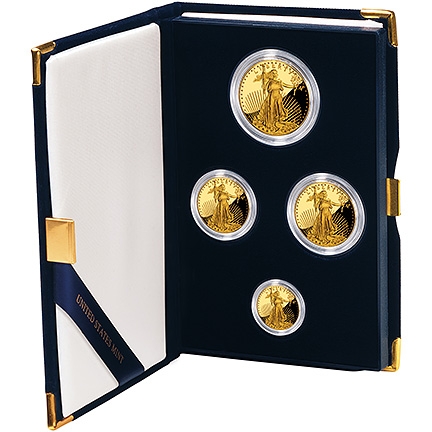
- 1 troy oz of fine gold in a .9167-fine (22-karat) alloy; 33.93 g total weight; $50 face value (U.S. Mint)
- American Silver Eagle
- 1 troy oz of .999-fine silver; $1 face value (U.S. Mint)
- 'Junk silver'
- Pre-1965 U.S. dimes, quarters, and half dollars: 90% silver, bought and sold for metal content, not collector value
- Spot price
- The wholesale per-ounce market price of the metal, before any dealer premium
- Premium
- What you pay over spot to buy, and the first thing you lose: dealers buy back at or under spot
Where metal sits in the ladder
Build in order: two weeks of food and water, then thirty days, then a power layer, then the cash reserve. Metals come after all of it, with money you will not need for years. The reason is simple math about what fails first. In every realistic emergency, households run out of water, food, fuel, and cash in that order, long before they need a portable store of wealth. Metal solves the fifth problem. Buying it first is the most common and most expensive mistake in this corner of preparedness.
Sized honestly, a metals reserve is a small share of a household's savings, held for the scenarios where portability and independence matter: a forced move, a banking disruption, a currency that buys less every month. It is not an investment strategy and should not be judged like one. It is insurance, and like all insurance it has a cost, which the next sections make plain.
What to buy: recognizable bullion
If you buy, buy what a stranger can verify in ten seconds. Government bullion coins are the standard because their weight, size, and purity are published and guaranteed by the issuing mint. The U.S. Mint's American Gold Eagle holds one full troy ounce of gold in a 22-karat alloy (the harder alloy is why the coin weighs 33.93 grams while still containing a full ounce), and the Silver Eagle holds one troy ounce of .999-fine silver. Both are legal tender at face values far below their metal value, which is a feature: the coin's worth is its metal, not its denomination.
Small denominations matter more than total ounces for the barter scenarios people imagine. Fractional gold coins (a tenth or quarter ounce) and one-ounce silver coins divide; a one-ounce gold coin does not. Pre-1965 U.S. dimes and quarters, the 90-percent silver coins dealers call junk silver, are the classic small change of metals: instantly recognizable, hard to fake profitably, and priced by content. Avoid graded and collectible coins entirely. A collector premium is real money you paid for rarity, and rarity is the first thing a buyer in a hurry will refuse to pay for.
Premiums and spreads: the round-trip cost
Nobody buys metal at spot. You pay spot plus a premium that covers minting, distribution, and the dealer's margin, and small coins carry higher premiums per ounce than large bars. When you sell, the dealer buys at spot or a little under. That gap, the spread, means the metal must rise noticeably before you break even. On a small silver purchase the round trip can cost a fifth or more of what you paid. Anyone who tells you metals are a sure store of value without mentioning the spread is selling, not informing.
The practical defenses are boring ones. Buy from established dealers who publish their buy-back prices, so the exit cost is visible before you enter. Compare the total round trip between two or three dealers, not the headline premium on one coin. And keep every receipt: documentation makes resale faster and cleaner years later.
The honest risks
Volatility first. Silver ran to about $49 an ounce in 2011 and was back near $14 by the end of 2015. Gold peaked at $850 in 1980 and then spent roughly two decades sliding and recovering, touching about $250 around the turn of the century. An asset that can halve and stay down for years is not a savings account. Money you might need next year does not belong in metal, full stop.
Liquidity is the second risk. Physical metal sells in days, not seconds: you ship it, the dealer verifies it, and payment follows. Bars from unknown refiners can face extra scrutiny or lower offers; recognizable government coins sell fastest, which is another argument for boring bullion. Third, storage: metal at home can be stolen, and metal in a bank box can be unreachable in the very disruption you bought it for. Most holders split the difference with a discreet home location known to one trusted person. Finally, counterfeits exist and are getting better. Buy from established dealers, and weigh and measure every coin on arrival against the mint's published specifications; a coin that matches weight, diameter, and thickness is very hard to fake.
Barter basics, without the fantasy
Barter in real disruptions is mostly neighbors, not strangers at a checkpoint. It runs on relationships and repeat dealing: eggs for firewood, labor for a generator hour, a spare part for help with a roof. Small-denomination silver can settle the difference when both sides trust the coin, which is exactly why recognizable junk silver outperforms an exotic bar in practice. But nobody should plan to barter for essentials they could simply have stored. Barter is what you do with your surplus, and surplus comes from the food, water, and skills layers, not from a coin tube.
The most barterable asset is a skill: small-engine repair, medical training, carpentry, canning, radio operation. Skills weigh nothing, cannot be stolen, and appreciate with practice. If the barter scenario is the one that motivates you, the honest shopping list is a course and a toolbox before it is a tube of coins.
Where to buy, and a note on our link
Buy from dealers with a long operating history, published buy-back prices, insured shipping, and no pressure tactics on the phone. One we point readers to is Money Metals Exchange, founded in 2010 in Eagle, Idaho, which sells gold, silver, platinum, palladium, and copper and runs its own depository for customers who want storage. The link in this guide's buy box is a plain link: this site has no affiliate agreement with them today and earns nothing if you buy. Check any dealer's current terms yourself before sending money, and start with a small order to learn their process before committing to a large one.
Step-by-step: put it into practice
Tick each step off as you complete it. Your progress is saved on this device.
Where to buy: we link brands directly until our affiliate reviews are complete. Current plain links:
Sources
Facts checked against the sources above. Last verified: November 11, 2026. If a figure here ever conflicts with an official source, the official source wins, and we want to hear about it via the contact page.
Reader comments
No comments yet. Yours could be the first; every comment is read by a person before it appears here.